
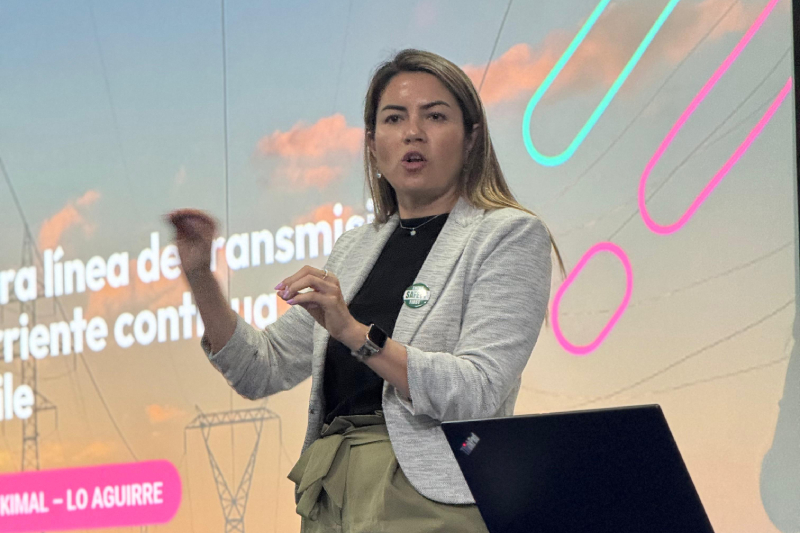
Training professionals capable of facing the challenges of the energy transition goes beyond technical expertise. With this premise in mind, the Kimal–Lo Aguirre electricity transmission project participated in a talk aimed at electrical engineering students at the University of Antofagasta, where it shared its experience in territorial engagement and community relations in large-scale energy infrastructure projects.
The activity is part of the project’s academic partnership program with universities and technical training centers in the regions where it operates, with the aim of strengthening the training of local human capital and bringing future professionals closer to the real challenges of the energy sector.
The talk was given by Glenda Soto Candia, Project Manager for the Kimal–Lo Aguirre Connection, who addressed the main lessons learned from the development of the route, emphasizing early dialogue with communities, respect for local contexts, and responsible land management as key elements for the social viability of strategic projects.
During the presentation, it was highlighted that electrical transmission works associated with new technologies, such as high-voltage direct current (HVDC), require a comprehensive approach that combines engineering, environmental sustainability, and social management. In this sense, territorial linkage is presented as an enabling condition for moving toward a more secure and resilient electrical system that is aligned with the challenges of climate change.
“The energy transition is not built solely on technology or infrastructure; it is also built on relationships of trust, knowledge of the territory, and professionals capable of understanding its complexity. Spaces like this allow us to share real experiences with students who will be leading electrical projects in northern Chile and throughout the country tomorrow,” said Glenda Soto Candia.
The event allowed students to learn firsthand how social and territorial challenges are managed in large-scale projects, broadening their understanding of the role they will play as future engineers in a context where sustainability, dialogue, and social license are increasingly relevant.
Conexión Kimal–Lo Aguirre emphasized that these initiatives seek to contribute to local employability and strengthen the link between academia and the productive sector, promoting technical training aligned with the environmental, regulatory, and social demands facing the energy industry in Chile today.